BLOGGER TEMPLATES AND TWITTER BACKGROUNDS »

Lunes, Marso 28, 2011

Who built the Pyramid?


Dolor, John Ivan R. BSIT1-1
Friday group 9:00-10:30
 They were built, with the begrudging help of great armies of slaves, by the ancient pharaohs of Egypt as tombs for preserving their royal bodies. Pyramids were meant to be monuments to the pharaoh's greatness, filled with great treasures for the afterlife. To construct these massive shrines, the pharaoh's copied the oldest and largest pyramid of all, the Great Pyramid of Giza.
             But the Great Pyramid itself contains no pharaoh's body, no treasure chamber, and no treasures.
    Who,  then, designed it and built it? What was its purpose? Let us begin our tour by considering a few basic
    facts about  the Great Pyramid.


The pyramids are so accurately aligned with the points of the compass that only aliens could have achieved this all those thousands of years ago. The angle of the slope of the sides is so precise only aliens could achieve this. The blocks are so heavy and the pyramid so tall only aliens could achieve this. In the period 2500 BC man did not have the tools or knowledge necessary to build the pyramids, so only aliens could have done it. How the aliens built the pyramids is not known, but they would have employed the use of advanced construction equipment.


Never underestimate the ingenuity of man. We are today so used to using machinery to carry out virtually all our major construction work that we sometimes forget that machinery, in terms of historical events, is a very new development, its only been around a couple of hundred years or so. Mankind managed very well without it for many thousands of years. We have long forgotten the techniques that were used in the building of the pyramids, but this doesn't mean that we are unable to work out how it was done.


At the quarry face there are blocks cut into the rock but not yet cut away. There are rough hewn blocks scattered around ready for transporting and on-site finishing. The entire quarry shows obvious signs of systematic development of cutting blocks out from the face and transporting them from site. The rough hewn free standing blocks show the scars of repeated chisel blows where they were chiseled out of the rock face. There is nothing in the manner of these blocks that is anything other than old fashioned quarry work using a mallet and chisel. Nowhere is there any sign of advanced technology having been employed, just the opposite. The blocks were hewn out of the rock-face by manual labour, the signs are unmistakable. The chisels used were made of copper, the hardest metal then available, but even they were only good for about 100 blows before blunting, even though limestone is relatively soft and easy to work compared to hard rock such as granite. As the chisels were blunted they were exchanged for re-sharpened ones, and the process was repeated with a team of blacksmiths constantly re-sharpening and tempering the chisels.
How were the blocks transported to the pyramids? By man power. The vast majority of the blocks weighed in the region of 2.5 tons and were transported on wooden sledges. They could of course have chosen any size for the blocks, but this must have been the optimum size, any bigger would probably have slowed them down. A team of men with ropes could drag the sledge across the clay floor, and this could be eased with a little water tipped in front of the runners helping the sledge to slide easier. It is estimated that it may have taken 10 years just to build the ramp from the quarry to the pyramids. In this manner all the blocks could be transported to the site of the pyramid without presenting any insurmountable challenges. So far no alien technology required, it could all be done by well organised teams of men, and a great deal of manual labour. During the time of the annual flooding of the Nile the stone blocks could have been floated to the site of the pyramids on rafts, making the task a lot easier.
The work force was was not one of slaves , the Egyptians didn't need slaves. The Nile supplied a very fertile land where farming was relatively easy and food abundant. This civilisation had time on its hands, no wonder they were such great mathematicians, astronomers and architects. The work force was primarily made up of farmers, recruited nationwide for a period ranging from a few months to a few years, and they served their time for their king, much like serving National Service today in the armed forces. A total of 20,000 to 30,000 workers would have been needed for the task, ranging from unskilled hauliers, semi-skilled quarry men, skilled quarry men, masons who finished the blocks, men who placed the blocks, officials and caterers. A village was purpose built to house them all and they were well fed and cared for in return for their work. The remains of the village can still be seen today.
Now for making the pyramids themselves. About 2,550 B.C., King Khufu, the second pharaoh of the fourth dynasty, commissioned the building of his tomb at Giza. Some Egyptologists believe it took somewhere in the region of 80 years to construct the pyramid. Having man-hauled the blocks to the site of the pyramid the obvious problem now is how to stack them up. There are a number of ways this may have been achieved, all of which require a ramp, or a system of ramps, as the only method available to the ancient Egyptians was man-power, and they had that in abundance.
The actual method of ramps used is not known with any certainty, but it most likely started with a single ramp by which means the blocks could be hauled into position. The blocks were laid down in layers, each successive layer being a little smaller in area than the one below it to give the pyramid its shape. As the blocks are layed onto a level surface, the same height as the ramp, no lifting was required, only hauling of the sledges. Removing the blocks from the sledge may have involved no more than dragging the block off the sledge. The entire pyramid could have been built using this simple system without a single block actually having to be lifted off the ground! No alien technology required. Very smart people these Egyptians.
As each successive layer was laid the ramp would need be heightened, and lengthened so as not to be too steep. Eventually this method would reach a limit where the size and construction of the ramp would be nearly as complex as the pyramid. The easiest way around this problem is to curve the ramp around the pyramid as the pyramid increased in height.
Finally, all that remained was the placing of the top stone, followed by the placing and fitting of the smooth white blocks. As the facing stones were placed so the ramp could be removed as they worked their way back down. The pyramid required a certain amount of interior design and construction for the burial chambers, and this was no easy task. The blocks that protected the burial chamber were 50 ton blocks of granite. Even with the huge teams of men at their disposal and a system of ropes and overseers guiding them, it would have been a difficult and dangerous task. There are still marks visible on the blocks and in the interior of the pyramid that were used to guide the blocks into position. Difficult yes, impossible no.
It was men that built the pyramids, make no mistake. Do not underestimate the intelligence of the ancient Egyptians or the trained manpower that was at their disposal. It was a colossal effort of team work taking 80 years to complete.
How did they align the corners of the pyramid so accurately with the four points of the compass? This was the easy part. It just takes a curved wall facing more or less North as judged by the stars. Select a rising star on the Eastern horizon and mark a line on the top of the wall pointing to it. Mark another line on the wall when it is low on the Western horizon. Take the line straight down the wall , using a plumb line, and then extend it along the ground until it meets the other line. Bisect this angle and you now have a line pointing exactly due North.
There are any number of very simple methods that can then be employed to construct a right angle that will then align with the other points of the compass. After that its just a question of placing markers in the ground for the four corners of the pyramid. As I said, that part is easy, it does not require alien technology, just a little brain power.
How did they achieve such a perfect 52 degree angle of slope? Because they were clever! They were masters of angles, a skill they had acquired in part through astronomy, and also through a good knowledge of mathematics. Each mason that worked on finishing the outer blocks had a template with an angle of 52 degrees that he used to cut his block to fit. After that it was careful alignment of block to block as they placed them carefully on the inner blocks. It was literally done step by step.
Mystery solved, that's how it was done. Maybe not using that exact method, but something very like it. There is absolutely no need to suggest that it couldn't be done by man power, and certainly there is no need to go to the ridiculous lengths of suggesting it was done with the help of aliens. That idea is pure nonsense.
Why were the pyramids built? They were tombs for the king. The Egyptians had long observed a point in the sky around which all the stars appeared to rotate (the north celestial pole, today marked by the close proximity of the Pole Star) and believed the area to be an immortal place. The alignment of the pyramid to the compass points was to align it with the 'immortal place' in the sky, and the shape was believed to represent the rays of the Sun. The pyramid was in fact a device designed to transport the king to the immortal place so that he may live forever, as would all the workers that assisted in its construction.
Source File:http://www.thekeyboard.org.uk/Who%20built%20the%20pyramids.htm

Linggo, Marso 27, 2011

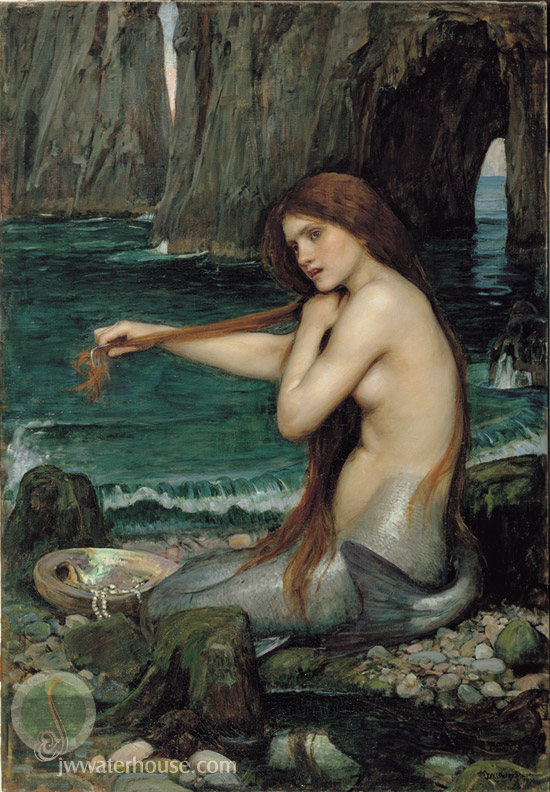
Mermaid: Is It REAL?


According to myth, they lure sailors by singing and with lovely music. They live in a kingdom on the bottom of the sea, and it is here they take their prisoners to. From this story, the fear amongst the sailor grew and they thought that seeing a mermaid would cause bad luck: it could predict death by drowning.
The belief in mermaids is not limited to a few countries, but there are tales from all over the world (in India, for instance, there are the Apsara, beautiful water nymphs). However, most of those tales were told by sailors who "saw" them on their long journeys. The idea of mermaids and mermen, the male equivalent, could be based on creatures from Greek and Babylonian mythology: Sirens and Tritons of the Greeks, and the fish gods, who were half human and half fish, from the Babylonians.

http://www.pantheon.org/articles/m/mermaid.html


-Don Mark Gervie R. Cabuñag
BSIT 1-1
9:00-10:30 TFri
Friday group

-who is Mona Liza
-UFO or skrydivers: Is It REAL?
-Werewolves: Is It REAL?


Werewolves: Is It REAL?

So, what actually is werewolf or lycanthropy? Is it a fact based on concrete evidences? Is it a myth, fabrication of feeble minds? Is it an exaggeration of some other things? Well, all these questions have been puzzling mankind for last 5 centuries. Though many ingenious hypotheses have been suggested as possible explanations, definite conclusion can't be drawn. Some experts have tried to observe it as purely supernatural phenomena while others have relied on  scientific observations. Contradictions and debates still persist and will continue till any single theory solves the jigsaw which seems unlikely considering complexity and diversity of the topic. Nonetheless, the werewolf phenomenon has not perished yet; recent werewolf sightings are still reported.


The word werewolf is most likely to derive from two old-Saxon words, wer(meaning man) and wolf. Frequently used Greek terms Lycanthropyrefers to the transformation process while Lycanthrope, which is in factsynonymous to werewolf, is the afflicted person. The popular definition ofwerewolf or lycanthrope is a man who transforms himself or being transformed into a wolf under the influence of full moon.


even though theres no such scientific evidence for this phenomena. Werewolves was known 5 centuries ago, here are some articles that make  you say  IS IT REAL?


Possible Explanations of Werewolf Phenomenon


So, what actually is werewolf or lycanthropy? Is it a fact based on concrete evidences? Is it a myth, fabrication of feeble minds? Is it an exaggeration of some other things? Well, all these questions have been puzzling mankind for last 5 centuries. Though many ingenious hypotheses have been suggested as possible explanations, definite conclusion can't be drawn. Some experts have tried to observe it as purely supernatural phenomena while others have relied on scientific observations. Contradictions and debates still persist and will continue till any single theory solves the jigsaw which seems unlikely considering complexity and diversity of the topic.

Mythological Explanation of Werewolf Phenomenon
Some people during middle ages believed that the werewolf was the projection of a demon, which made its victims appear as a wolf in his own eyes and to those around him. For others, the werewolf was a direct manifestation of the Devil. Early seventeenth century French author Henri Bouguet believed, as did a great many people of that day, that Satan would leave the lycanthrope asleep behind a bush, go forth as a wolf, and perform whatever evil might be in that person’s mind. According to Bouguet, the Devil could confuse the sleeper’s imagination to such an extent “that he believes he had really been a wolf and had run about and killed men and beasts.”
Robert Burton, the clergyman and scholar, considered lycanthrope to be a form of madness as mentioned in his book Anatomy of Melancholy in 1621; he blamed every thing from sorcerers and witches to poor diet, bad air, sleeplessness and even lack of exercise for this.
The Mysteries of Magic, written by nineteenth century French occultist Éliphas Lévi, postulates the existence of phantom - a body that acts as mediator between a living organism and the soul. “Thus in case of a man whose instinct is savage and sanguinary, his phantom will wander around in lupine form, whilst he sleeps painfully at home, dreaming he is a veritable wolf.” Lévi believed that the wounds so often reported in the cases of werewolves could be attributed to the out-of-body experience. He saw the human body as a subject to magnetic and nervous influences and capable of receiving the wounds suffered by the metamorphosed shape.
Contrary to the popular explanations existed during middle ages, few doctors at that time asserted that it was caused by an excess of melancholy or an imbalance in humors, the liquid or fluid part of the body. Many doctors believed that such melancholy could lead to insanity and delusion. One physician recommended that the lycanthrope should be treated with baths, purging, bleeding, dietary measures and rubbing opium into the nostrils.

Scientific Explanation of Werewolf Phenomenon:
Food contamination
The diet of medieval peasants may have been a source of werewolf delusions. Ergot infection on food grains like wheat and rye was common in Europe during the middle ages. This is actually a fungus which grows in place of grains in wet seasons after very cold winters. Alkaloids of this fungus are chemically related to LSD (LysergicAcid Diethylamide, a strong hallucinogenic psychoactive drug which produces dreamlike changes in mood and thought and alters the perception of time and space. It can create lack of self-control, extreme terror and blurring the feeling between the individual and the environment.) Similar to this modern drug, Ergot poisoning results in hallucinations, mass hysteria and paranoia. Continuous exposure to this contamination through bread or other food items could contribute to either an individual believing he is a werewolf or a whole town believing that they have seen a werewolf. A recorded Ergot poisoning case confirms this hypothesis. Nearly 135 people had to be hospitalized and 6 died poisoning in the French town of Pont St. Esprit in 1951. They ate bread made from Ergot infected rye. The victims had horrible visions of being attacked by tigers and snakes and of turning into beasts.
However, Ergot contamination is not sufficient enough as a single cause to explain lycanthropy; werewolf appearance have been reported from other parts of the world where Ergot infection is rare.

Substance Induced Hallucination
Recorded werewolf cases and contemporary literatures mention rubbing magic ointment on the skin or inhaling vapor from magic potion by the alleged lycanthrope. The main ingredients of the ointment or potion wereBelladonna or Nightshade that could produce hallucination and delusions of bodily metamorphose. This might explain how a wicked person make himself believe or act as a werewolf, but still the mystery of werewolf sighting remains ambiguous as it can’t induce same hallucination or delusions on surrounding people who has confirmed werewolf sightings.

Physical or Mental Illness
One branch of modern physicians refers lycanthropes as suffering from any of the five conditions; Rabies, Porphyria, Hypertrichosis, Body Image Distortion and psychological illness.
A strain of virus carried by dogs, wolves and other animals including vampire bats causes Rabies. The virus strikes the central nervous system and produces uncontrollable excitement and painful contractions of the throat muscles’ intervention preventing the victim from drinking. Usually the patient dies within three or four days of first symptom.
The second disease, Porphyria is a rare genetic disorder that results in a deficiency of heme, one of the pigments in the oxygen-carrying red blood cells. At the 1985 conference of the American Association for the Advancement of Science, biochemist David Dolphin suggested that the untreated symptoms of Porphyria match many of the traits associated with the classic lycanthrope. One of them is severe photosensitivity, which makes venturing out into daylight extremely painful and thus dooms the sufferer to a life of shadows and darkness. As the condition advances, the victim’s appearance grows increasingly morbid; discoloration of the skin and an unusual thick growth of facial or body hair occurs. There is a tendency for an abnormal change in skin and formation of sores. Eventually the disease attacks cartilage (the soft bone) and causes a progressive deterioration of the nose, ears, eyelids and fingers. The teeth, as well as the fingernails and the flesh beneath them might turn red or reddish brown because of deposition of Porphyrin, a component of Hemoglobin in the blood. Porphyria is often accompanied by mental disturbance, from mild hysteria to delirium and manic-depressive psychoses.
The third disease Hypertrichosis is also known as "Wolfitis", refers to a condition of excessive body hair growth. In most cases, the term is used to refer to an above-average amount of normal body hair that is unwanted and is an aspect of human variability. The hair growth can be generalized, symmetrically affecting most of the torso and limbs, or localized, affecting a particular area of skin. Though severe Hypertrichosis is quite rare it results in excessive or animal-like hair on face and body.
Defect in the part of the brain known to be involved in representing body shape causes body image distortion. A neuroimaging study of two people diagnosed with clinical lycanthropy showed that these areas display unusual activation, suggesting that when people report their bodies are changing shape, they may be genuinely perceiving those feelings. Body image distortions are not unknown in mental and neurological illness, so this may help explain at least part of the process. One further puzzle is why an affected person doesn't simply report that their body "feels like it is changing in odd ways", rather than presenting with a delusional belief that they are changing into a specific animal. There is much evidence that psychosis is more than just odd perceptual experiences so perhaps lycanthropy is the result of these unusual bodily experiences being understood by an already confused mind, perhaps filtered through the lens of cultural traditions and ideas.
Psychologists have concluded that lycanthropes are actually patient of psychiatric syndrome that involves a delusional belief that the affected person is, or has, transformed into an animal. It has been linked with the altered states of mind that accompany psychosis (the reality-bending mental state that typically involves delusions and hallucinations) with the transformation only seeming to happen in the mind and behavior of the affected person.
A study on lycanthropy from the McLean Hospital in New York reported on a series of cases and proposed some diagnostic criteria by which lycanthropy could be classified:
  • A patient reports in a moment of clarity or looking back he sometimes feels as an animal or has felt like one.
  • A patient behaves in a manner that resembles animal behavior, for example crying, grumbling or creeping.
According to these criteria, either a delusional belief in current or past transformation, or behavior that suggests a person thinks of themselves as transformed, is considered evidence of clinical lycanthropy. The authors go on to note that although the condition seems to be an expression of psychosis there is no specific diagnosis of mental or neurological illness associated with its behavioral consequences.

TRUE VAMPIRES?


A vampire is a mythical creature who overcomes death by sucking the blood from living humans. The most common variation of the myth portrays the vampire as a dead person who rises from the grave at night to seek his victim from the realm of the sleeping. The vampire is a popular theme of film makers who have started with Bram Stokers's novel (Dracula) and added a number of variations to the theme, e.g., the ability to fly (like the vampire bat); a lust for beautiful women as victims who then become vampires upon being bitten; fear of the symbol of the Christian cross; the repelling power of garlic or garlic flowers; and death by sunlight or by a special stake driven through the heart, a fitting death for a character commonly believed to be based on the 15th century warrior, Vlad the Impaler. However, according to Elizabeth Miller, author of Dracula: Sense & Nonsense (Desert Island Books, 2000), Bram Stoker did not base his vampire Count on Vlad the Impaler. He borrowed Vlad's nickname (Dracula) for a vampire character he had already conceived (and tentatively named Count Wampyr).
Legends of bloodsucking creatures are found in many cultures throughout history. One of the more popular bloodsuckers of our age is the chupacabra. The vampire is also a popular literary subject. Hence, there are numerous descriptions of the origin, nature, powers, etc. of vampires. What seems to be universal about vampire myths is their connection with the fear of death and the desire for immortality. The ritual drinking of blood to overcome death has been practiced by many peoples. The Aztecs and other Native Americans, for example, ate the hearts and drank the blood of captives in ritual ceremonies, most likely to satisfy the appetite of their gods and gain for themselves fertility and immortality. Also typical were the rites of Dionysus and Mithra, where the drinking of animal blood was required in the quest for immortality. Even today, some Christians believe that their priests perform a magical transubstantiation of bread and wine into the body and blood of Jesus to be eaten and drunk in the quest to join God in eternal life.
We might say we've made progress in our ritualistic quest to overcome death. First, we sacrificed humans and drank their blood to keep the gods alive and happy, or to join them in overcoming death. We later came to substitute bulls or other animals for humans to achieve our goal. Finally, we progressed to a vegetarian menu of bread and wine. Even so, the basic truth is depressing: for anything to live, something or someone else must die. Whether this truth sets you free or not depends, I suppose, on your place at or on the dinner table. Since we are deep into metaphors, we may as well note here that the vampire has become a metaphor for those who define and create themselves by destroying others. People whose lives center on destroying other people's lives by disempowering them, who reduce their victims to dependent subjects to be lorded over, have been called spiritual vampires. Some of the therapists, ministers and gurus I've written about elsewhere in the Dictionary could be called spiritual vampires, very aptly.
This cultural link between vampirism and the quest for immortality seems to have been subordinated in literature and film, where other themes, such as blood for blood's sake, fear for fear's sake, or entrance into the realm of the occult, seem to dominate. One sign of the cultural deterioration of our ancestor's noble quest for immortality can be seen in the modern secondary meaning of 'vampire': a woman who exploits and ruins her lover. Another example of deterioration can be seen in the numerous WWW sites on vampires which appeal to occult or New Age interests such as entering the so-called dark side of reality, gaining power, establishing a unique identity as a special person or selling commercial products and games.
Apparently, role playing and masquerading as vampires is not enough to satisfy the bloodlust of some people, and covens or cults of "vampires" have emerged among some occultists. They seek blood to give them power, a sexual rush, or to establish a unique and special fictional persona based on creating fear and mystery in others. Unlike our ancient ancestors, their power is not sought because of fear based on ignorance and misunderstanding of nature, but on ignorance and misunderstanding of themselves. Like other occult cults these vampire covens are attractive to the young and the weak.*  Just a few years ago, such "vampyres" would have been considered ill or evil. Today, they are said to have an "alternative lifestyle." Some may be misfits who really believe they can draw energy from each other, and who feel a sense of superiority over those who aren't part of their inner group.
 
 http://www.skepdic.com/vampires.html
Petilla, Richard BSIT 1-2
Friday group 9:00-10:30


UFO or skydivers?: Is It REAL?


This  UFO video were recorded in Lake Elsinore, a city in western Riverside County, California on Thursday, 6th January 2011 by two different and unrelated persons.

This triangle formation hovering in the night sky could also be skydivers with flares - you be the judge!

Witness report: We got out of the car at Starbucks and everyone was standing in the parking lot staring at 3 lights forming a triangle in the sky. We saw it for about 1 minute before we started this recording. The lights all went out at the same time.
Author (margiemertz @ youtube)

what do you think  is it  a UFO or just a a military flares?, is it REAL?

Famous Crystal Skulls

The crystal skulls are a number of human skull hardstone carvings made of clear or milky quartz rock, known in art history as "rock crystal", claimed to be pre-Columbian Mesoamerican artifacts by their alleged finders. However, none of the specimens made available for scientific study have been authenticated as pre-Columbian in origin. The results of these studies demonstrated that those examined were manufactured in the mid-19th century or later, almost certainly in Europe.[1] Despite some claims presented in an assortment of popularizing literature, legends of crystal skulls with mystical powers do not figure in genuine Mesoamerican or other Native American[2] mythologies and spiritual accounts.
The skulls are often claimed to exhibit paranormal phenomena by some members of the New Age movement, and have often been portrayed as such in fiction. Crystal skulls have been a popular subject appearing in numerous sci-fi television series, novels, and video games.


http://en.wikipedia.org/wiki/Crystal_skull 
Elacion, Liza F.BSIT1-1
Friday group 9:00-10:30

Sabado, Marso 26, 2011

Who is Mona Liza?

Many questions arose over the years as to the true identity of the lady in the portrait. The Italians call her La Gioconda, which means "the light-hearted woman." The French version, La Joconde, carries a similar meaning, provoking many thoughts and theories about the Mona Lisa's smile.